

Why your Ethereum wallet should feel like a seatbelt, not a shiny gadget

Here’s the thing.
Using an Ethereum wallet in a browser feels both powerful and risky.
I remember losing access once because of a tiny mistake.
My instinct said the extension looked off even before I clicked install.
At first I shrugged it off, but then I rebuilt my approach to wallets, permissions, and transaction checks with a level of paranoia that actually improved my real security posture.
Really?
DeFi made me greedy for yield, and then cautious about approvals.
Hmm… somethin’ about endless “approve all” flows nagged at me.
Initially I thought a shiny interface and lots of users meant safe, but then I learned to look under the hood for audits, open source, and community scrutiny before trusting anything with funds.
On one hand convenience accelerates adoption, though actually security failures propagate faster and cost real money when private keys or approvals are mishandled, so tradeoffs matter.
Whoa!
Rabby caught my eye because it tries to be that seatbelt—simple until you need the heavy lifting.
It gives you clearer allowance controls, transaction simulations, and hardware wallet support so you can avoid dumb mistakes.
I’ll be honest: the first time I used a simulation to see what a contract would do, I averted a bad token approval and felt relieved and a little smug.
What bugs me about many wallets is that they hide RPC switching or signature context, and Rabby surfaces these things in ways that make decision-making faster and safer when you’re under pressure.
Okay, so check this out—
I recommend trying a careful install path and verifying the source before you add any extension.
If you want to test Rabby on your machine, get the app from the official channel and follow standard safety steps like verifying the checksum and avoiding third-party unpacked extensions.
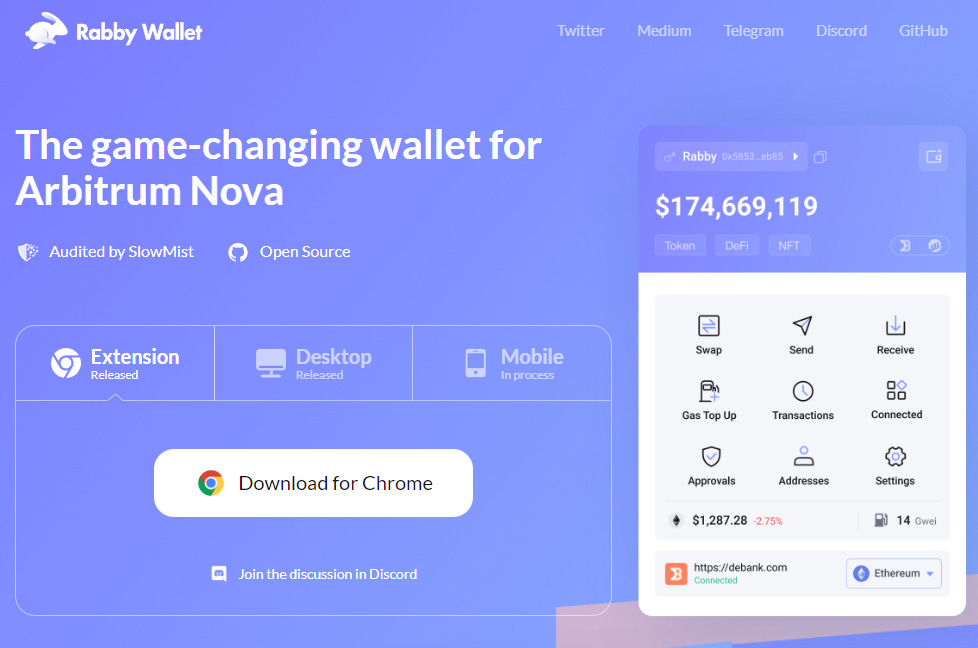
For convenience, here’s a direct place to get a proper build and step through the install: rabby wallet download.
Don’t paste your seed phrase into anything online, and never share it over chat or email—seriously, that’s step one.
Really?
Phishing remains the top vector for most user losses, sadly.
Extensions can be spoofed, and URLs can be crafted to look identical to legit sources—so verify, triple-check, and when in doubt, pause the flow.
Something I do now is take a breath before approving anything that requests unlimited token allowances, and if the UI doesn’t show the contract details, I revoke or reject until I can audit it.
My instinct said trust but verify, and then I formalized that into a habit: read the calldata, simulate the tx, and only approve minimum allowances unless there’s a compelling UX reason.
Whoa!
Hardware wallets are your best friend against browser compromise.
Pairing a hardware key with an extension reduces attack surface because the signing occurs offline in a separate device.
On rare occasions devices fail or firmware has bugs, so keep firmware updated and only use well-reviewed hardware from reputable vendors; it’s not perfect but it’s dramatically better than seed phrases living in clipboard history or text files.
Also, managing multiple accounts between your hot extension and a cold hardware-backed account is a practical way to keep daily use small and long-term holdings offline.
Here’s the thing.
Rabby’s allowance manager helps you find and revoke stale approvals across chains, which is low-hanging fruit for reducing risk.
That feature alone probably saved me from a surprise drain during a recent token airdrop scam, true story.
Technically, it queries token approvals and then lets you batch-revoke or set tight allowances, which removes a massive class of exploits that rely on perpetual approvals.
I’m biased toward tools that put control back in the user’s hands, because centralized fixes are slow and users need usable defenses now.
Hmm…
Another part that matters is RPC security and chain switching protections.
Malicious RPC endpoints can manipulate your transaction view, lie about balances, or suggest dangerous gas values.
So I run a trusted list of endpoints, and when an app proposes a chain switch I verify it manually—if the wallet doesn’t make this explicit, I treat it like a red flag and refuse or test on a small amount first.
It’s not glamorous, but a 0.01 ETH test before big moves is a habit that saves headaches.
Really?
Transaction simulation is underrated as a safety practice.
Seeing a dry-run of a swap or contract call often reveals hidden approvals or extra calls you’d never expect.
Rabby and a few other wallets simulate state changes and gas usage; when a simulation shows an odd token transfer or unexpected approval, it’s a sign to dig deeper or cancel.
Initially I dismissed simulation as noisy and unnecessary, but then a simulation showed a multi-call that siphoned tokens through a bridge I didn’t authorize, and that changed how I evaluate every approval.
Whoa!
Let’s talk UX tradeoffs for a second.
Security features only work if people actually use them, so wallets must balance friction with education.
Rabby tries to surface security prompts without making everything feel like a college exam, though sometimes it errs on the side of verbosity and that can annoy users who want speed.
On balance I’d rather click one extra confirmation than lose funds, but that preference is subjective—I’m not 100% sure everyone will agree, and that’s fine.
FAQs about Ethereum wallet security and Rabby
How do I verify an extension is legitimate?
Check the publisher name, review the extension’s source repository if available, confirm checksums where offered, and prefer official stores or verified distribution channels; never install an unpacked extension from random links.
Should I store large balances in a browser wallet?
Nope. Keep small amounts for daily interactions in an extension and store the bulk in a hardware wallet or other cold storage solution to minimize risk from browser compromise.
What about token approvals?
Limit allowances to the minimum necessary, revoke unused approvals regularly, and use tools that show all approvals across chains so you can clean up legacy permissions.